Products
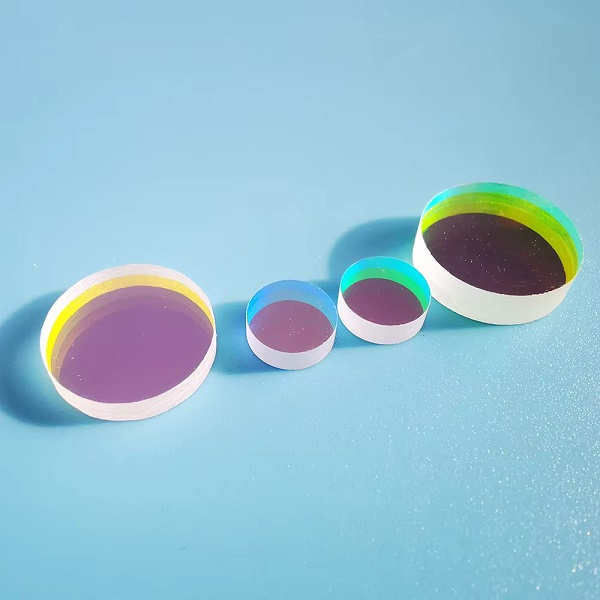
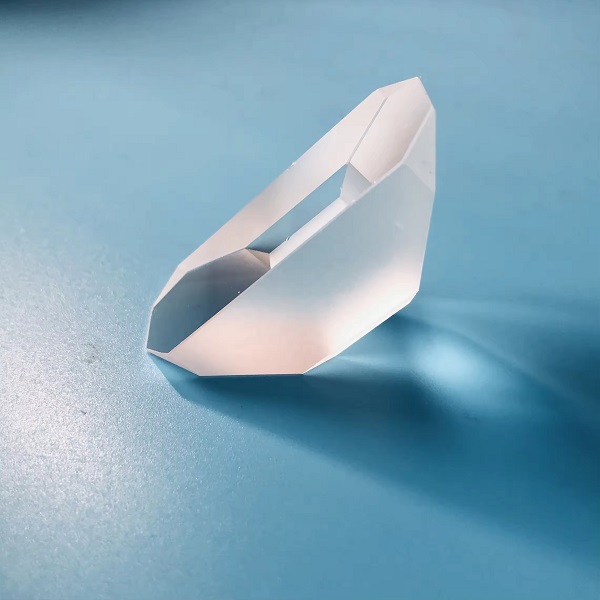
The application of fused silica windows in high-power lasers is critical and irreplaceable. They primarily serve the dual roles of an “optical barrier” and a “laser transmission channel.” Owing to its exceptionally superior comprehensive properties, fused silica is the material of choice for manufacturing high-power laser windows.
This is the most fundamental function. The interior of a laser may be under vacuum or filled with a specific protective gas (e.g., nitrogen) to prevent oxidation or contamination of optical components. The fused silica window is hermetically sealed onto the laser cavity, perfectly isolating the internal pure environment from external dust, moisture, and contaminants, while allowing the laser beam to pass through unimpeded.
It acts as the output coupler of the laser, transmitting the generated laser beam to the exterior.
In some configurations, it also serves as an input coupler, allowing pump light or other laser beams to enter the laser cavity.
In complex laser optical paths, wedged fused silica windows (with a slight angle between the two faces) are sometimes used. While functioning as a window, they utilize the slight refraction they produce to finely adjust the propagation direction of the beam.
| Key Characteristics | Importance for High-Power Lasers | Performance of Fused Silica Windows |
| Extremely High Laser Induced Damage Threshold (LIDT) | The most critical parameter. Determines the maximum laser power/energy density the window can withstand without being damaged. | Exceptionally high. Fused silica is one of the materials with the highest known LIDT (especially near the 1064nm wavelength), which is crucial for handling laser power densities in the kW to MW range. |
| Very Low Absorption Coefficient | Any absorption leads to thermal lensing (lens deformation due to uneven heating) and thermal stress, ultimately degrading beam quality or even causing catastrophic failure. | Absorption rate is extremely low (especially in the near-infrared band, such as the 1064nm wavelength of YAG lasers). This means that the vast majority of laser energy passes through without loss, resulting in minimal heat generation. |
| Excellent Thermal Stability & Low Coefficient of Thermal Expansion | Even with minimal absorption, the material must resist thermal shock and deformation to maintain stable optical surface figures. | It has an extremely low coefficient of thermal expansion of ~5.5×10⁻⁷/°C, meaning it exhibits minimal dimensional change when heated. This introduces negligible optical path difference and results in outstanding resistance to thermal shock. |
| Superior Optical Homogeneity | Any internal refractive index inhomogeneity distorts the wavefront and degrades beam quality (e.g., increases the M² factor). | It can be fabricated to a high degree of homogeneity. High quality laser grade fused silica exhibits minimal refractive index variation across the entire aperture, ensuring minimal wavefront distortion. |
| High Surface Quality & Low Defect Density | Surface scratches, flaws, or contaminants can strongly absorb laser energy and become initiation points for damage. | It can be super-polished to achieve sub-nanometer surface finish (λ/10 or better), with significantly reduced sub-surface damage, thereby maximizing the LIDT. |