
Products
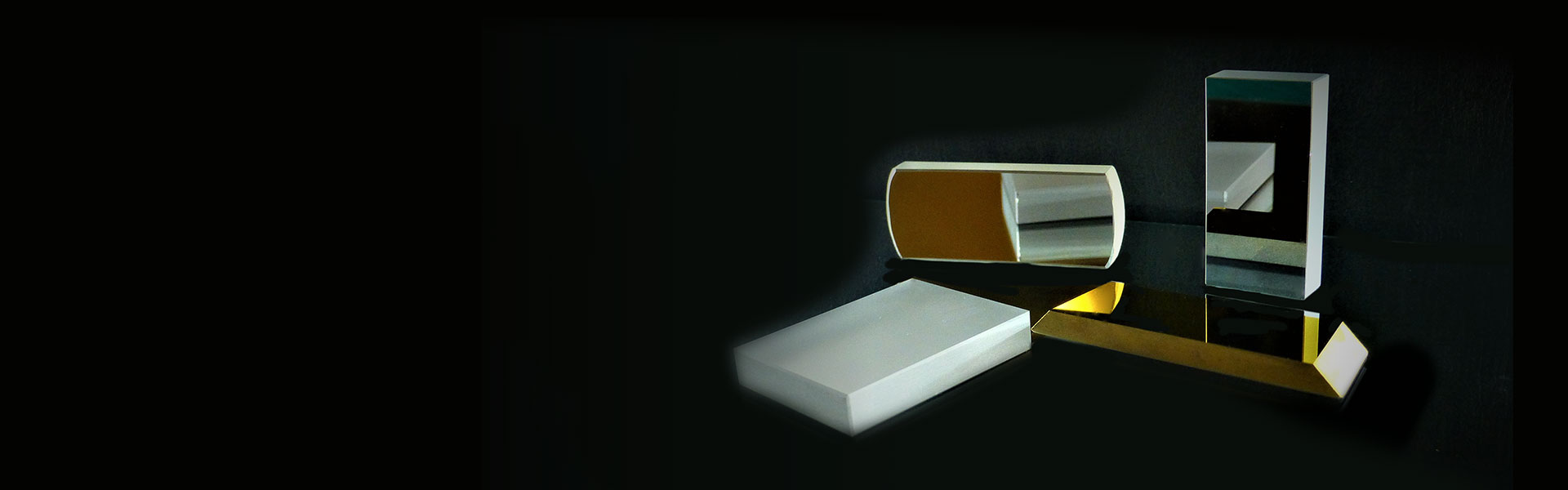
In an era where the invisible world of heat is becoming visible with astonishing clarity, one material sits at the heart of the revolution: Germanium. If you have ever marveled at the sharpness of a night vision goggle, the precision of an anti-drone system, or the reliability of an industrial furnace inspection, you have witnessed the work of a Germanium Infrared Lens.
But why Germanium? Why does this metalloid, discovered in 1886, remain the undisputed champion for Long-Wave Infrared (LWIR) optics despite supply chain challenges and the emergence of alternatives? Whether you are an optical engineer, a procurement specialist, or a tech enthusiast looking to understand the “eyes” of modern thermal cameras, this deep dive will walk you through the science, the manufacturing mastery, and the future of Germanium infrared optics.
This comprehensive guide is designed to give you the technical depth you need to make informed decisions while highlighting why Germanium remains the gold standard—and what to consider when sourcing these high-precision components today.
To understand the dominance of Germanium, we must look beyond its silvery appearance and delve into its interaction with infrared radiation. Unlike standard optical glass, which acts as a brick wall to infrared light, Germanium is like a perfectly transparent window for heat signatures.
The primary reason Germanium is indispensable lies in its spectral transmission. Germanium is exceptionally transparent in the 8 µm to 14 µm wavelength range . This is not a random number; this is the “thermal imaging sweet spot.” Objects at room temperature emit the peak intensity of their infrared radiation precisely within this band.
Conventional glass blocks this radiation entirely. Germanium, however, allows it to pass through with minimal signal loss, enabling high-sensitivity sensors to detect temperature differences as minute as 30 milliKelvin or less . While Germanium transmits effectively from 2 µm to 23 µm, its performance in the LWIR band is what makes it the preferred substrate for Forward Looking Infrared (FLIR) and thermal core modules .
Germanium boasts an incredibly high refractive index of approximately 4.0 (at 10.6 µm) . In practical terms, this means that light bends much more sharply passing through a Germanium lens than through other materials. This property allows designers to achieve the same optical power with significantly shallower surface curvatures .
For system integrators, this is a game-changer. It facilitates the creation of lightweight, compact optical assemblies. In applications like UAV-mounted cameras or handheld tactical devices, where every millimeter and gram counts, Germanium’s high index allows for smaller lenses that still pack a powerful focusing punch. Furthermore, its low dispersion minimizes chromatic aberration, meaning that different wavelengths of infrared light focus at the same point, resulting in sharper, higher-contrast images .
However, Germanium is not without its nuances. It is important to acknowledge its physical characteristics to appreciate the engineering required to tame it. Germanium is inherently brittle and relatively soft on the Mohs scale (6.3) compared to some other optical materials, making it susceptible to scratching .
Moreover, it suffers from thermal runaway. As temperatures rise (typically above 100°C or 350 K), the increased electron population begins to absorb infrared radiation, making the lens opaque . This limits its use in extreme high-temperature environments unless carefully managed. Its density (5.33 g/cm³) also makes it heavier than some alternatives, a factor that aerospace engineers must balance against its superior optical qualities .
Knowing the “what” is only half the story. The “how” is where modern engineering meets ancient crystallography. Machining Germanium is notoriously difficult due to its hardness and brittleness, but recent advancements have pushed the boundaries of what is possible.
Germanium is a single-crystal or polycrystalline material that fractures easily. Traditional grinding methods can induce micro-cracks on the surface. These microscopic defects are the enemy of optical clarity; they scatter light, reduce contrast, and degrade the overall efficiency of the thermal imaging system . For years, manufacturers have struggled to balance material removal rates with surface integrity.
Enter In Situ Laser-Assisted Diamond Turning (ILADT) . This cutting-edge process, validated by recent research, combines localized laser heating with single-point diamond turning . By heating the germanium surface precisely at the cutting zone, the material becomes more ductile and less brittle. This “thermal softening” allows the diamond tool to shear the material cleanly rather than fracturing it.
The results are staggering. Researchers have achieved surface roughness (Sa) as low as 0.909 nanometers—that is near-atomic smoothness—with profile errors measured in micro-inches . This level of precision is vital for aspheric lenses, which require complex surface equations to correct for spherical aberration . For high-resolution systems with pixel pitches as small as 12 μm, any optical imperfection becomes glaringly obvious, making such advanced manufacturing techniques non-negotiable .
Given that Germanium is an expensive material, cost-effective manufacturing is critical. Advanced 5-axis optical grinding machines now utilize “scoop-grinding” techniques. Instead of grinding down an entire boule into dust, manufacturers can scoop out the core of a dome or lens blank from a solid cylinder .
The removed material isn’t waste. In modern, cost-conscious production lines, germanium scrap is meticulously collected and recycled. This process maximizes the return on investment (ROI) for material costs, making high-performance optics slightly more accessible and reducing the environmental footprint of mining and refining new germanium .
While Germanium is a superstar, it is not the only actor on the infrared stage. Depending on your specific application—be it laser optics or multispectral imaging—other materials might play a supporting role. Here is how Germanium stacks up against the competition.
For applications strictly requiring LWIR imaging—such as security surveillance, electrical inspections, and military targeting—Germanium remains the superior choice due to its unmatched combination of high refractive index and excellent transmission in the 8-14 μm range .
A raw Germanium lens is powerful, but a coated one is virtually indestructible. The application of thin-film coatings transforms a brittle optic into a battlefield-ready component.
Germanium’s high refractive index causes significant Fresnel reflection losses—basically, light bounces off the surface instead of passing through. Broadband Anti-Reflective (BBAR) coatings are engineered to solve this. Depending on the design, these coatings can be optimized for specific bandwidths, such as 3-5 µm, 8-12 µm, or a broad 3-12 µm range, ensuring that maximum energy reaches the detector .
Beyond transmission, survival is key. Diamond-Like Carbon (DLC) coatings are applied to Germanium to combat its inherent brittleness. DLC is one of the hardest coating materials available, providing exceptional resistance to scratching, corrosion, saltwater, and mechanical impact . This is why you find coated Germanium lenses in maritime systems, where salt spray would quickly etch an uncoated optic, and in the protective covers of high-end thermal cameras used in dusty industrial environments .
The final piece of the puzzle is the market itself. Understanding the commercial landscape is crucial for anyone looking to procure Germanium infrared aspheric lenses.
The global market for Germanium Infrared Aspheric Lenses is on a steady upward trajectory. Valued at approximately US$ 32.5-33.2 million in 2024, it is projected to reach around US$ 42-43 million by 2031, growing at a compound annual growth rate (CAGR) of roughly 4.1% to 4.3% . This growth is fueled by increased demand for thermal cameras in automotive driver-assistance systems, smart city surveillance, and medical imaging.
However, the market is currently navigating turbulent waters. Supply chain disruptions, geopolitical tensions, and new tariff measures have made Germanium sourcing increasingly challenging . Sharp price increases and extended lead times are now common, forcing manufacturers and buyers to re-evaluate their supply chains.
Leading the charge in manufacturing and supply are established optical companies like Edmund Optics, Avantier, Knight Optical, Shanghai Optics, and asphericon . When selecting a supplier, technical specifications are paramount.
Engineers must scrutinize:
Despite the current supply hurdles, the demand for higher resolution will continue to drive innovation. As detectors move towards smaller pixel pitches and higher definitions (HD formats), the demand for diffraction-limited imaging will only increase. This puts the spotlight back on manufacturing precision. The companies that master ILADT and efficient recycling will likely lead the next generation of optical system design.
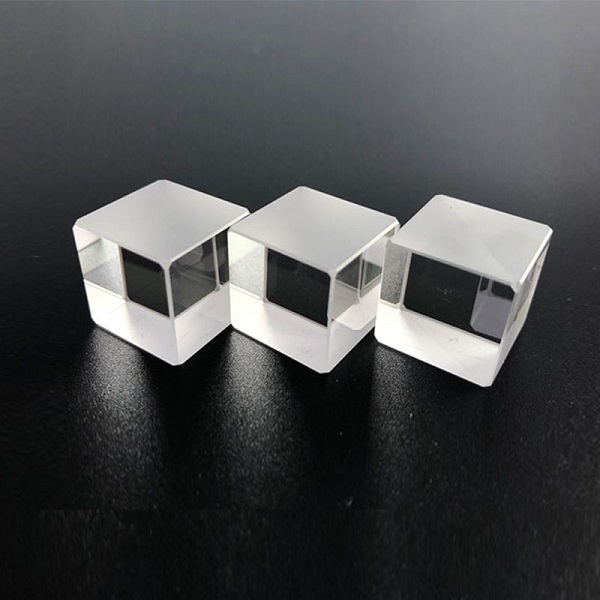
The Germanium Infrared Lens is far more than a piece of glass; it is a triumph of materials science and precision engineering. From its unique atomic structure that perfectly transmits heat signatures to the nanometer-precision machining required to shape it, Germanium sits at the intersection of physics and craftsmanship.
While the market faces headwinds in terms of material availability and cost, the optical superiority of Germanium—particularly its high refractive index and LWIR transmission—ensures its place at the core of high-performance thermal imaging. Whether you are designing a mission-critical defense system or a predictive maintenance tool for a smart factory, the choice of lens material is the difference between seeing a blur and detecting a threat.
If you are currently navigating the complexities of infrared system design or facing sourcing challenges for germanium optics, reaching out to a specialized supplier with deep technical expertise is the critical next step. Ensure your thermal vision remains sharp, no matter the conditions.