
Products
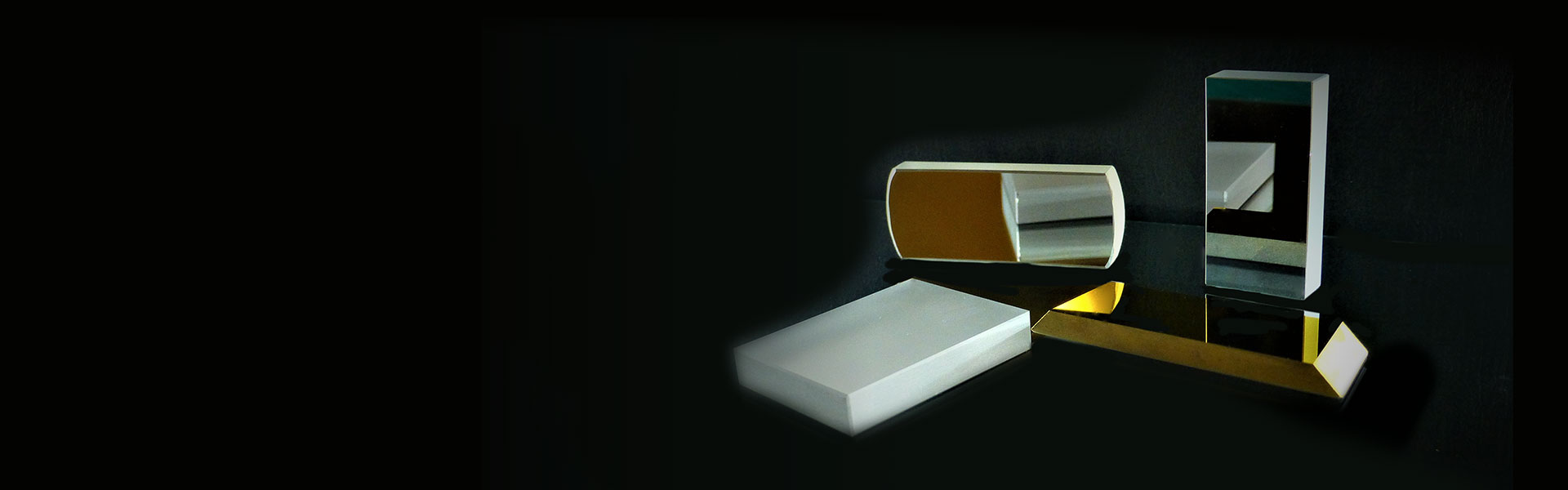
When you’re designing infrared optical systems, material selection isn’t just a technical detail—it’s the foundation of system performance. Among the available materials, germanium glass lenses occupy a unique position. Unlike ordinary optical glass, which blocks infrared radiation entirely, germanium offers something remarkable: exceptional transmission in the long-wave infrared (LWIR) spectrum where thermal imaging thrives.

If you’ve ever handled a germanium lens, you might have noticed its metallic luster and surprising weight. That silvery appearance hints at its semiconductor origins, while the density speaks to its atomic structure—atomic number 32, positioned between silicon and tin on the periodic table. But what makes this material truly indispensable for thermal imaging, spectroscopy, and defense applications? Let’s look into the physics, manufacturing nuances, and practical considerations that define germanium optics today .
Germanium crystallizes in a diamond cubic structure, similar to silicon, but with distinct optical behavior. Its refractive index of approximately 4.0 stands as one of the highest among infrared materials—nearly double that of zinc selenide and significantly higher than chalcogenide glasses . This high index means light bends more sharply when entering germanium, allowing lens designers to achieve required optical power with less curvature.
The transmission spectrum tells an even more compelling story. Pure germanium transmits infrared radiation across an extraordinary range—from 2 to 23 micrometers—with minimal absorption. This spans both the mid-wave infrared (MWIR, 3–5 μm) and long-wave infrared (LWIR, 8–14 μm) atmospheric windows, making it exceptionally versatile. However, there’s a critical catch: above approximately 100°C, transmission degrades rapidly as thermal excitation fills the material’s bandgap, effectively rendering it opaque .
Thermal cameras detect radiation emitted by objects based on their temperature. At room temperature, objects emit primarily in the 8–14 μm range—precisely where germanium transmits most efficiently. This wavelength alignment isn’t coincidental; it’s why germanium became the standard for uncooled thermal imaging.
The material’s low dispersion further enhances image quality. When infrared radiation passes through a lens, different wavelengths typically focus at slightly different points—chromatic aberration. Germanium’s dispersion characteristics minimize this effect in the LWIR band, producing sharper images with better thermal contrast .
Consider what happens inside a thermal imaging module: infrared radiation enters through a germanium lens, which must transmit 8–14 μm wavelengths while rejecting visible light that would confuse the detector. Germanium naturally blocks visible and near-infrared radiation below 1.8 μm, functioning as an intrinsic spectral filter. This property simplifies system design, eliminating the need for separate blocking filters .
Not all germanium lenses are created equal. Optical-grade germanium requires exceptional purity—typically 99.999% or higher—because impurities introduce absorption centers that degrade transmission. Manufacturers produce this material through zone refining, where molten zones travel along germanium ingots, concentrating impurities at one end for removal.
Single-point diamond turning dominates germanium lens fabrication. Unlike conventional grinding and polishing, diamond turning uses ultra-precision lathes with single-crystal diamond tools to directly machine the optical surface. This method proves particularly valuable for germanium because it:
However, diamond turning leaves microscopic tool marks that scatter infrared radiation. Post-polishing techniques can reduce scatter but risk altering the precisely machined figure. Engineers must balance surface finish against form accuracy based on application requirements.
When evaluating germanium lenses, several specifications demand attention:
Surface quality, typically specified as scratch-dig per MIL-PRF-13830, directly impacts scatter and system contrast. Defense applications often require 40-20 or better, while commercial thermal imaging may accept 60-80. A 60-40 specification allows scratches up to 0.06 mm width and digs up to 0.4 mm diameter—acceptable for many applications but potentially problematic for high-resolution systems .
Centration error, expressed in arcminutes, describes how precisely the optical axis aligns with the mechanical axis. Less than 3 arcminutes represents typical commercial quality, while precision systems demand 1 arcminute or better. Miscentered lenses introduce astigmatism and degrade modulation transfer function .
Clear aperture defines the usable lens diameter where specifications apply. Most manufacturers guarantee 90% of physical diameter, leaving the outer edge for mounting without affecting optical performance .
Focal length tolerance varies by application. Standard tolerances of ±1% suffice for many imaging systems, while interferometric applications may require ±0.1% or tighter. Remember that germanium’s refractive index changes with temperature—approximately 400 ppm/°C—meaning focal length shifts significantly in varying environments .
Uncoated germanium reflects approximately 36% of incident radiation at each surface due to its high refractive index. Without coatings, a simple lens transmits only about 40% of incoming infrared energy—unacceptable for most applications .
Anti-reflection coatings solve this problem through destructive interference. Thin-film stacks of materials like zinc sulfide and germanium itself create precisely controlled layers that cancel reflections at specific wavelengths. Typical broadband coatings achieve average reflectivity below 3% across 8–12 μm, boosting transmission to 94% or higher .
For harsh environments, diamond-like carbon (DLC) coatings add mechanical protection. DLC combines high hardness—approaching natural diamond—with infrared transparency when properly designed. These coatings resist abrasion from wiping, protect against salt spray, and withstand thermal cycling. Maritime and ground vehicle applications often mandate DLC coating for reliability .
Unmanned aerial vehicles (UAVs) represent one of the fastest-growing applications for germanium optics. Small gimbaled payloads require compact, high-resolution thermal imagers for surveillance and targeting. Germanium’s high refractive index enables shorter focal lengths in confined spaces, while its LWIR transmission captures heat signatures through darkness, smoke, and light fog.
Riflescopes and handheld thermal monoculars similarly benefit from germanium’s optical efficiency. A soldier detecting human targets at 1000 meters needs every photon possible—germanium’s transmission efficiency directly impacts detection range. The material’s durability matters here too: military optics must withstand shock, vibration, and extreme temperatures without degrading .
Electrical utilities use thermal imaging to identify overheating connections before catastrophic failure. Manufacturing plants monitor bearing temperatures, refractory lining integrity, and process uniformity. These applications demand consistent, repeatable imaging—precisely what germanium lenses deliver.
Fixed-mount thermal cameras in industrial settings face contamination challenges. Dust, oil mist, and chemical vapors settle on lens surfaces. Germanium’s compatibility with DLC coatings allows periodic cleaning without scratching, maintaining image quality over years of service .
Infrared spectroscopy relies on germanium optics for sample analysis. Attenuated total reflection (ATR) crystals made from germanium contact samples directly, enabling identification of molecular structures through their infrared absorption signatures. The material’s chemical resistance and mechanical stability ensure reproducible measurements .
Thermal imaging also finds medical applications in fever screening, inflammation detection, and surgical guidance. Germanium lenses in medical thermal cameras must deliver high thermal sensitivity—often 50 mK or better—to detect subtle temperature variations clinically .
Advanced driver assistance systems increasingly incorporate thermal imaging for pedestrian detection at night. Germanium lenses enable these cameras to see living beings through headlight glare, fog, and darkness. While cost remains challenging for consumer automotive, premium vehicles and autonomous trucking applications continue driving development .
Engineers selecting infrared materials face trade-offs across multiple dimensions. Zinc selenide (ZnSe) transmits from visible through LWIR but offers lower refractive index (2.4) and softer mechanical properties. It remains the standard for CO₂ laser optics at 10.6 μm but requires thicker, more curved elements for equivalent optical power .
Zinc sulfide (ZnS) provides multispectral capability—transmitting visible light alongside infrared—making it valuable for systems requiring visual and thermal imaging through a common aperture. However, its transmission range narrows slightly, and refractive index remains lower than germanium .
Silicon offers cost advantages for MWIR applications (1.2–8 μm) but cannot reach the LWIR band critical for uncooled thermal imaging. Its high thermal conductivity suits high-power applications, and mechanical robustness exceeds germanium .
Chalcogenide glasses present an intriguing alternative. These amorphous materials can be molded rather than diamond turned, potentially reducing manufacturing costs at scale. Some formulations approach germanium’s transmission range, though typically with lower refractive index and greater chromatic effects. However, many chalcogenide glasses contain arsenic, introducing health and environmental concerns during manufacturing and disposal .
Despite alternatives, germanium maintains advantages where:
Germanium availability has shifted dramatically. As a byproduct of zinc refining and coal combustion, germanium supply depends on industries with different economic drivers. China dominates global production, creating geopolitical exposure for defense and critical infrastructure applications .
Recent years brought price volatility and extended lead times. Buyers who once expected 4–6 week deliveries now face 12–16 week lead times for standard lenses, with custom optics stretching longer. Some manufacturers report allocation constraints, particularly for large-diameter blanks .
Organizations managing germanium lens supply successfully employ several strategies:
Multi-sourcing qualification spreads risk across multiple optical manufacturers. However, requalifying lenses from new suppliers requires careful optical testing—lenses may meet specifications while performing differently in system context.
Inventory buffer management protects against supply interruptions. Companies increasingly hold safety stock of critical lens types, accepting carrying costs for supply assurance.
Design flexibility through dual-track development maintains germanium-based reference designs while incubating alternatives. When germanium becomes constrained or costly, qualified alternative designs can deploy without requalifying entire systems .
United States tariff policies introduced additional complexity. Beyond direct cost impacts, tariffs complicate sourcing decisions and introduce uncertainty in multi-year programs. Some manufacturers now request tariff contingency clauses in contracts or shift finishing operations to mitigate exposure.
Export controls affect germanium optics differently by destination and application. Defense-related shipments face heightened scrutiny, requiring documented end-use certifications and compliance with International Traffic in Arms Regulations (ITAR) where applicable .
Germanium’s refractive index changes with temperature—approximately 400 ppm/°C—causing focal shift as systems warm or cool. Athermalization techniques address this through:
For systems operating above 30°C, germanium itself emits infrared radiation near 9.6 μm. This self-emission can reduce contrast or appear as background signal. Careful optical design and signal processing mitigate these effects .
Modern thermal sensors with 12 μm pixel pitch and 640×480 resolution demand exceptional optics. Germanium lenses for these sensors must achieve modulation transfer function (MTF) exceeding 0.3 at Nyquist frequency—approximately 40 line pairs per millimeter. This requires:
Fielded germanium lenses face diverse challenges. Humidity can degrade unprotected coatings. Salt fog corrodes uncoated surfaces. Sand and dust erode optical surfaces through cleaning or direct impingement.
Qualification testing typically includes:
Germanium glass lenses remain fundamental to infrared optics despite supply challenges and emerging alternatives. The material’s unique combination of high refractive index, broad LWIR transmission, and proven manufacturing processes ensures continued relevance for high-performance thermal imaging.
Successful optical designers now treat germanium as one tool among many—selecting it where its advantages justify cost and supply considerations, while qualifying alternatives where appropriate. This balanced approach maintains system performance while building resilience against market volatility.
Whether you’re designing next-generation thermal weapons sights, industrial monitoring systems, or scientific instrumentation, understanding germanium’s capabilities and limitations guides better optical decisions. The material that enabled thermal imaging’s growth will continue serving critical applications, even as the optical landscape evolves.
Need expert guidance on germanium lens selection or custom infrared optical design? Our optical engineers specialize in high-performance thermal imaging solutions. Contact our technical team to discuss your specific requirements—we’ll help you navigate material choices, specification development, and supply considerations for your project.