
Products

In the realm of precision optics, the Double Convex Lens stands as one of the most fundamental and enduring optical elements. It remains central to tasks like beam focusing and image transmission. Whether in high-power laser systems, life science microscopes, or even the potentially industry-disrupting field of liquid lens technology, the design and selection of a double convex lens directly determine the performance ceiling of an optical system.
If you are searching for optical components capable of withstanding high damage thresholds, or require custom lenses optimized for the SWIR band, this guide will delve into not just the “what,” but the “why” and “how-to” of selection. We aim to provide valuable insights for your optical projects.
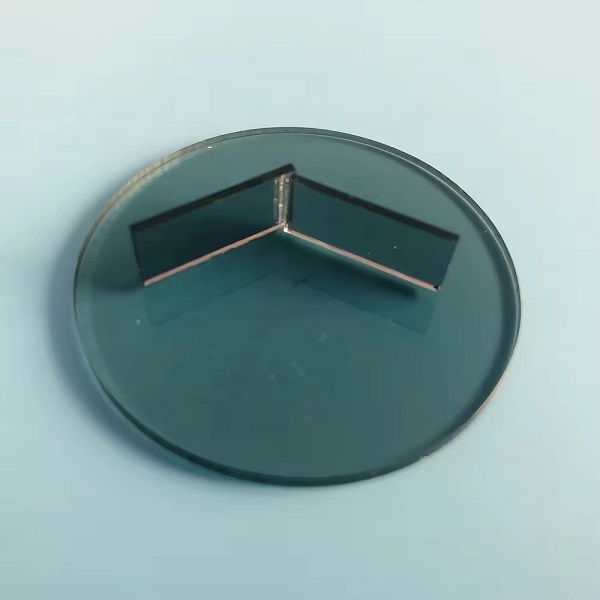
A double convex lens, also known as a biconvex lens, is visually defined by two outwardly curved surfaces with equal radii. However, this symmetry belies a complex interplay of optical physics.
Unlike a plano-convex lens, the double convex lens exhibits excellent optical performance when the conjugate ratio is close to 1:1. The conjugate ratio is simply the ratio of the object distance to the image distance. When the object and image are equidistant from the lens on opposite sides, the symmetrical structure of the double convex lens automatically compensates for a portion of spherical aberration and coma.
According to optical design principles, within a conjugate ratio range of 5:1 to 1:5, the double convex lens is the optimal choice for minimizing aberrations. This is precisely why it’s nearly irreplaceable in 1:1 imaging systems, such as relay lenses or replicators.
Engineers often prioritize focal length during selection, sometimes overlooking how lens thickness influences the location of the principal planes.
No single lens is universal. The performance limits of a double convex lens are largely dictated by its substrate material. Furthermore, modern optical coatings enable a single lens element to achieve peak transmission within a specific waveband.
An uncoated double convex lens suffers from Fresnel reflections, losing approximately 4% of light per surface due to reflection. This totals nearly 8% loss for both surfaces. Besides reducing efficiency, these reflections can create harmful feedback in laser systems. Therefore, customizing the AR coating for your waveband is essential:
This is a frequently debated topic. While both are positive lenses, choosing the wrong type in practical engineering can severely degrade system performance.
For double convex lenses inside laser processing heads, the numerical aperture is a key parameter. NA determines the lens’s ability to gather and focus light. To approach diffraction-limited performance, some high-end applications utilize aspheric aplanatic double convex waveguide lenses. These maintain a double convex form but incorporate slight aspheric corrections to the surface profile, achieving high-performance focusing with NA values up to 0.35.
Optical technology is moving from “solid” to “liquid.” Traditional solid double convex lenses have a fixed focal length once manufactured. However, the emergence of double convex liquid lenses is beginning to change this paradigm.
Recent research explores three-layer liquid lenses based on the dielectrophoretic effect. Simply put, applying a voltage alters the curvature of the interface between two immiscible liquids, effectively creating a dynamic double convex lens.
When requesting quotes or customizing double convex lenses, specifying only diameter and focal length is insufficient. A rigorous datasheet should include the following critical parameters, which directly influence cost and performance.
For laser applications, especially high-power lasers, surface quality is paramount. A common standard is 40-20, meaning maximum allowable scratch width of 0.04mm and dig diameter of 0.02mm. For extremely demanding environments like deep UV lithography, the stricter 10-5 standard may be necessary.
Typically specified as λ/4 or λ/10 @ 632.8nm. λ/10 means the deviation of the actual lens surface from the ideal spherical shape is no more than one-tenth of a helium-neon laser wavelength (approx. 63nm). λ/10 lenses are suitable for interferometry or high-end imaging, while λ/4 suffices for general illumination or focusing tasks.
This indicates the alignment of the optical axes of the two spherical surfaces. Poor centration causes image rotation or blurred imagery. In high-precision applications, centration error is typically required to be less than 1 arc minute (<1′) or even tighter.
Theory ultimately serves practice. Here are specific scenarios where double convex lenses play a critical role.
In fiber lasers, light exiting the fiber is divergent. A double convex lens can collimate this divergent light into a parallel beam. Placing another double convex lens with a different focal length after the first creates a beam expander, altering the laser spot diameter.
In finite-tube-length optical microscopes, the objective lens itself comprises multiple lens groups, including double convex elements. According to imaging principles, changing the distance (tube length) between the objective and eyepiece alters total magnification and image position. Precise placement of double convex lenses allows designing microscopes for erect or inverted images.
Inspecting circuit boards often requires transmitting the board’s image to a sensor without distortion. Due to their symmetrical structure, double convex lenses excel in 1:1 imaging relationships and are frequently used in telecentric optical designs to ensure measurement accuracy.
Having covered the technical details, the final step is selecting a partner capable of turning specifications into reality.
A quality supplier possesses not only grinding and polishing capabilities but also advanced coating equipment and metrology tools. Whether each lens undergoes inspection with a coordinate measuring machine or interferometer before shipment is a strong indicator of quality. Prioritizing suppliers with ISO9001 certification who can provide detailed inspection reports (e.g., Zygo reports) offers greater confidence.
Standard catalog items often cannot meet extreme system design requirements. This necessitates suppliers with rapid prototyping and flexible manufacturing capabilities. Key details, such as the ability to achieve tight diameter tolerances (+0.0/-0.1mm) on K9 glass or precision edge beveling to prevent chipping, are crucial indicators of a supplier’s process expertise.
Conclusion and Call to Action
The double convex lens, seemingly a classic optical component, is being revitalized by modern technology in fields like LiDAR, biomedicine, and aerospace. Whether standard K9 glass lenses, zinc selenide elements for IR lasers, or cutting-edge varifocal liquid lenses, correct selection is foundational to project success.
If you encounter optical design challenges in your project or require custom lenses with high damage thresholds, please contact us. Operating from Class 10,000 cleanrooms with full lifecycle quality traceability, we are dedicated to providing comprehensive double convex lens solutions covering the spectrum from UV to IR. Click “Inquiry” on our website or call us today to discuss your specific optical requirements!