
Products
In optical design, we often become enamored with complex multi-layer coatings, the magical curves of aspherics, or those expensive achromatic doublets. However, for the most fundamental imaging tasks, one component is frequently used “as a given” but rarely chosen with deep consideration—the Double convex lens.
When you drag and drop a double convex lens into your optical design software, are you truly sure you are using it correctly? It is not merely a simple superposition of two outward-curving spherical surfaces, but a precisely calculated “key of symmetry.” Today, we won’t delve into obscure physics textbook theories. Instead, we will explore the front lines of engineering applications, discussing the irreplaceable role of the double convex lens at finite conjugate distances and how it can become the “silent game-changer” in your optical system.
A common mistake made by many novice engineers is thinking that any task requiring light convergence calls for a lens with two bulging sides. However, a double convex lens (DCX) is not merely a “symmetric version” of a plano-convex lens (PCX). In the world of optical aberrations, they play distinctly different roles.
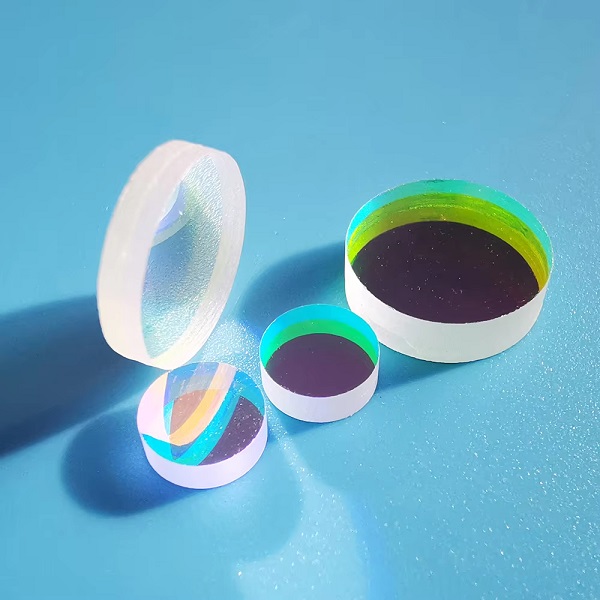
If you need to image a point source onto another point (i.e., finite conjugate ratio, such as 1:1 imaging), the double convex lens is theoretically near-optimal. This is because when the object distance and image distance are equal or very close, the deflection angles of light rays passing through the front and rear surfaces of the lens also tend to be symmetrical .
This symmetry offers a significant advantage: it automatically compensates for a portion of spherical aberration and coma. Light rays originate from the object, refract at the front surface, and refract again at the rear surface. Because the curvature of both surfaces is identical, the path taken by the rays is nearly symmetrical, acting like two perfectly coordinated guards guiding the light precisely to the target point. In contrast, using a plano-convex lens in this scenario forces the planar side to bear an excessive burden of deflection, leading to a sharp increase in aberrations .
When should you unhesitatingly choose a double convex lens? The answer is when your system’s conjugate ratio (object distance : image distance) falls within the range of 0.2:1 to 5:1 .
High-Value Tip: If you are an optical designer for laser processing equipment debugging a focusing module, it’s worth checking your conjugate ratio. If the working distance and image distance are relatively close, switching to a double convex lens might yield a pleasantly surprising improvement in your focused spot diameter.
The soul of a high-quality Double convex lens lies in its substrate. With the evolution of photonics technology, conventional optical glass alone can no longer meet the stringent demands across the entire spectrum. How you choose the right material based on your application’s wavelength band is crucial for determining your system’s signal-to-noise ratio and damage threshold.
For the most common applications in the visible to near-infrared range (350nm – 2200nm), N-BK7 (or its equivalent K9) reigns supreme as the king of cost-effectiveness . It offers excellent homogeneity, strict control over bubbles and inclusions, and is relatively easy to fabricate.
However, a critical note is that BK7 begins to show absorption in the NIR region (especially beyond 2μm). If your laser wavelength is around 1050nm, a BK7 double convex lens performs admirably. But if you are working with 1550nm communication bands, you might consider the next contender.
When energy levels rise and wavelengths lengthen, material selection becomes paramount:
An uncoated bare lens loses approximately 4% of light per surface due to Fresnel reflections. For a double convex lens, with two surfaces, this amounts to nearly an 8% total loss . This is not just energy attenuation; it’s also a primary source of stray light within the system.
The strategic choice of coatings varies based on the target waveband:
Within complex imaging systems, the Double convex lens rarely exists in isolation. It might be part of a relay lens group or a component of an eyepiece. However, its symmetrical form dictates its special role in the process of image transfer.
In microscope systems, double convex lenses are frequently used for relay imaging or as components of the eyepiece . As the microscope tube length varies, the double convex lens effectively helps maintain field flatness. Particularly in systems requiring 1:1 image transfer (such as some inverted microscopes), leveraging the symmetry of a double convex lens allows for the precise transfer of an intermediate image to the next stage without introducing significant additional distortion .
For machine vision lenses, while resolution is important, the geometric stability of the image (distortion control) is equally critical.
Due to their symmetrical structure, double convex lenses exhibit principal plane shifts depending on thickness, but they also tend to offer lower inherent distortion potential . When selecting components for applications demanding low-distortion image transfer, symmetrical double convex lens groups are often easier to design with than asymmetrical structures to achieve the target.
With the proliferation of 3D printing, VR/AR, and high-energy lasers, the Double convex lens is moving beyond the laboratory into highly customized consumer and precision manufacturing industries.
In the field of glasses-free 3D displays, a special type of “3D switchable double convex lens” is transforming the visual experience . These lenses utilize liquid crystals or microstructures to electrically control the refractive index, enabling seamless switching between 2D and 3D display modes. While physically different from traditional glass lenses, this represents a microscopic manifestation of the double convex lens principle—managing light direction to achieve spatial division.
In laser cutting and welding heads, the focusing lens is often the final optical element before the workpiece.
Due to their greater thickness, double convex lenses can offer superior thermal stability in certain high-power applications. Customized fused silica double convex lenses, combined with precision YAG-BBAR coatings, can withstand prolonged exposure to multi-kilowatt laser beams . In such extreme environments, the lens’s surface quality (e.g., surface accuracy of λ/10, scratch-dig specification) directly dictates the equipment’s processing yield and the lifespan of consumables .
When you proceed to purchase based on your calculated focal length and diameter, several critical parameters are often overlooked. As a procurement specialist or design engineer, when requesting quotes for double convex lenses, be sure to pay attention to the following three points to avoid common pitfalls:
For a double convex lens, the optical axes of both spherical surfaces must coincide. If “decentration” exists (meaning the axes of the two spheres are misaligned), the lens behaves like a small wedge prism, causing image center shift or beam pointing instability . When making inquiries, pay close attention to the “coaxiality tolerance” or “wedge angle.” True industrial-grade OEM integration tolerates no deviation .
If your lens is intended for a laser environment, don’t just look at the transmission percentage; scrutinize the Laser-Induced Damage Threshold (LIDT) . A coating optimized for the VIS-NIR range might be durable under a 1064nm nanosecond laser but could be instantly destroyed under 532nm green light . When specifying your needs, clearly stating your laser parameters (wavelength, pulse duration, repetition rate, power density) is a hallmark of professionalism.
The Double convex lens, this seemingly simple optical component, is a perfect manifestation of the symmetric beauty inherent in geometric optics. It is unassuming, yet in its intended applications (1:1 imaging, finite conjugate systems), it always proves to be the quietest yet most capable assistant.
Next time you gaze upon an optical path, don’t just see it as a piece of transparent glass. Consider its curvature, ponder its material, scrutinize its coating. You will discover: The most fundamental components often hold the last key to unlocking your system’s performance potential.
If you are seeking high-quality, high-precision double convex lens solutions for your optical system—whether standard K9 glass lenses or custom-coated fused silica or infrared crystal lenses—please feel free to contact us. Our team of engineers will provide optimal selection advice and OEM customization services based on your specific conjugate ratio and application waveband, ensuring your system design is not just “feasible,” but “exceptional.”