
Products
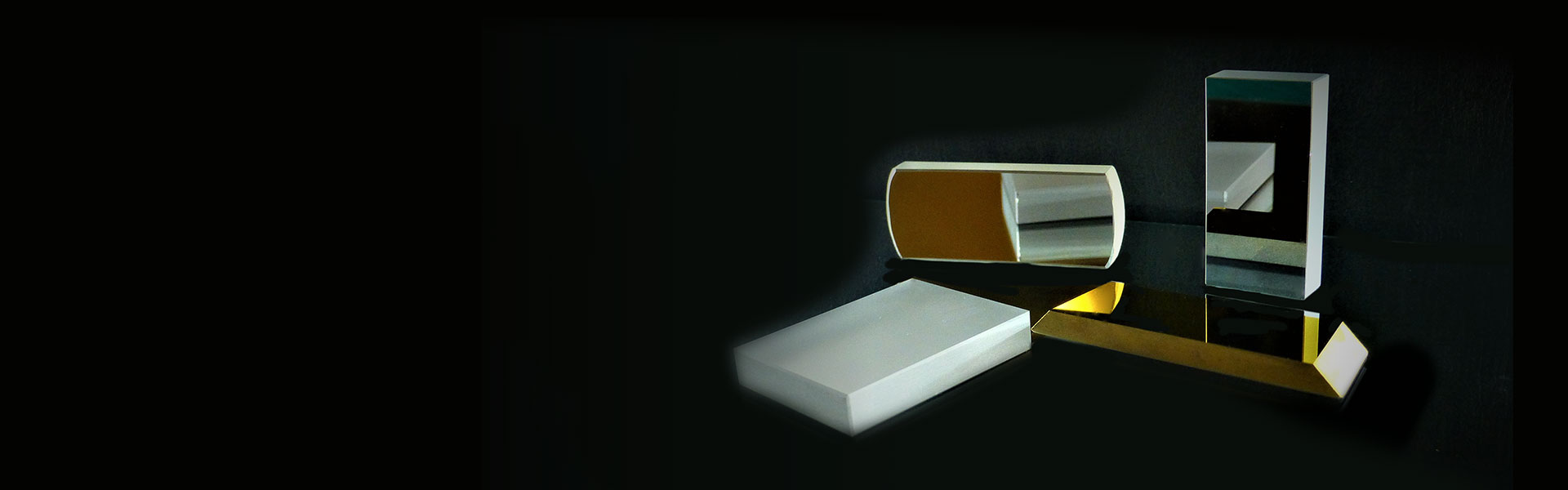
In an era where visibility is often a luxury—be it through dense fog, pitch-black darkness, or swirling smoke—thermal imaging has emerged as the great equalizer. At the heart of every high-performance thermal camera lies a material that is paradoxically opaque to the human eye yet transparent to heat: germanium. While silicon rules the digital age, germanium commands the infrared spectrum. For engineers, procurement specialists, and systems integrators, understanding the nuances of the germanium lens is not merely an academic exercise; it is the dividing line between a system that merely functions and one that excels under pressure.
This deep dive explores the unique physics of germanium, the manufacturing precision required to harness it, and the strategic considerations—including current geopolitical supply challenges—that dictate its use in modern defense, industrial, and autonomous systems.
To understand why germanium is indispensable, one must first discard preconceptions about transparency derived from visible light. A standard glass window is excellent for visible light but acts as an impenetrable wall to thermal radiation . Germanium, a semi-metallic crystalline semiconductor, operates on a completely different principle.
Germanium possesses an exceptionally high refractive index of approximately 4.0 . In practical terms, this means that light bends sharply when passing through the material, allowing lens designers to achieve significant optical power with fewer elements. This results in lighter, more compact optical assemblies—a critical factor for weight-sensitive platforms like drones and unmanned aerial vehicles (UAVs) . Furthermore, its low dispersion ensures that different infrared wavelengths focus at the same point, minimizing chromatic aberration and producing the sharp, high-contrast images required for differentiating minute temperature differences .
The defining characteristic of germanium is its transmission spectrum. While it is opaque in the visible band, it offers extremely high transparency in the Long-Wave Infrared (LWIR) region, specifically between 2 µm and 14 µm, with peak performance in the 8–14 µm range . This is scientifically significant because objects at room temperature emit peak thermal radiation precisely in the 8–14 µm band. A germanium lens captures the natural “glow” of objects without requiring active illumination, making it the gold standard for passive thermal sensing.
While germanium is a powerhouse, it is not a universal solution. The choice of optical material often involves a trade-off between spectral range, thermal stability, and mechanical durability. As supply chains tighten, understanding the competitive landscape is vital .
Zinc Selenide offers a broader transmission range (0.5–20 µm), covering both visible and IR spectra . However, it has a significantly lower refractive index (~2.4) and is softer, making it prone to chipping. ZnSe is the material of choice for high-power CO₂ lasers, but for pure LWIR imaging in rugged environments, germanium’s toughness and optical power usually win out. Zinc Sulfide is tougher than ZnSe but has a narrower transmission band; recent developments in anti-reflective (AR) coatings are closing the gap, but germanium still leads in the LWIR niche .
Silicon is a cost-effective alternative for the Mid-Wave Infrared (MWIR) range (1.2–8 µm) and boasts excellent thermal conductivity and mechanical strength . However, it fails completely in the LWIR band, making it unsuitable for standard uncooled thermal cameras. Chalcogenide glasses are emerging as a potential substitute due to their ability to be molded into complex shapes, reducing manufacturing costs. However, many formulations contain arsenic, introducing health and environmental concerns, and they often cannot quite match germanium’s refractive index or durability in extreme thermal environments .
The inherent properties of germanium—hard and brittle—make it notoriously difficult to machine. The quality of the final image is directly correlated to the surface integrity of the lens.
Germanium has low fracture toughness. Traditional grinding and polishing can easily induce micro-cracks on the lens surface. These microscopic imperfections scatter infrared radiation, leading to a loss of contrast and reduced image clarity . For high-resolution sensors with pixel pitches as small as 12 µm, any optical flaw becomes immediately visible in the final image .
To combat brittleness, manufacturers are turning to advanced techniques like in-situ laser-assisted diamond turning (ILADT) . In this process, a laser beam heats and softens the germanium surface locally at the exact point of cutting. This ductile-regime machining prevents fracturing, allowing a single-crystal diamond tool to sculpt the lens with astonishing accuracy. Recent studies have achieved surface roughness (Sa) values as low as 0.909 nm and profile errors of just 0.135 µm . This level of precision ensures that the lens introduces virtually no artifacts into the thermal image.
Uncoated germanium reflects away roughly 30% of incident infrared radiation due to its high refractive index . Anti-reflective (AR) coatings are essential to boost transmission to near 100%. More importantly, for systems deployed in the field, Diamond-Like Carbon (DLC) coatings are applied . Germanium is inherently brittle; a DLC coating transforms the external surface into a scratch-resistant, environmentally robust shield capable of withstanding sand, salt spray, and physical impact, making it suitable for maritime and defense applications .
Selecting a germanium lens is not just about choosing a diameter. It involves a sophisticated understanding of optics and detector physics.
The focal length determines the Field of View (FOV) . A short focal length (e.g., 7.5 mm) provides a wide-angle view for situational awareness, while a long focal length (e.g., 35 mm or zoom configurations up to 105 mm) offers a narrow FOV for long-range identification . The Instantaneous Field of View (IFOV) dictates the smallest detail the system can resolve. For defense and autonomous vehicles, balancing FOV and IFOV is critical—you need to see both the broad scene and the fine details of a potential threat .
The f/# is the ratio of focal length to aperture diameter. A lower f/# (e.g., f/1.0) allows more thermal energy to reach the detector, drastically improving sensitivity, measured as Noise Equivalent Temperature Difference (NEdT) . A camera with an f/1.0 lens and an NEdT of 20 mK can detect temperature differences 2.5 times smaller than an f/1.55 camera at 50 mK . However, lower f/# lenses are larger, heavier, and more complex to correct for optical aberrations.
Germanium is thermally sensitive; its refractive index changes with temperature. A lens perfectly focused at 20°C may drift out of focus at -20°C or +50°C. High-end systems employ athermalization techniques. Passive athermalization uses mechanical housings made of materials that expand or contract to compensate for the optical shift. Active athermalization uses temperature sensors to motor-drive the lens back into focus . For autonomous vehicles and drones that operate across seasons and climates, this is non-negotiable.
The deployment of germanium optics spans the gamut from commercial drones to sophisticated military hardware.
In UAVs, weight is the ultimate constraint. Germanium’s high refractive index allows for thinner, lighter lenses that still offer the optical power needed for surveillance and targeting . Domes made of germanium protect gimbaled cameras in high-speed flight, while windows shield internal FLIR systems from debris . For counter-UAS operations and threat detection, thermal cameras must perform in complete darkness and through obscurants; germanium lenses make this possible .
Drones equipped with germanium-lens thermal cameras inspect power lines for hot spots, detect gas leaks, and monitor solar panel efficiency . On the ground, fixed-mount thermal cameras use germanium optics for predictive maintenance in manufacturing, identifying overheating bearings or electrical faults before catastrophic failure occurs.
Visible cameras struggle in low-light conditions and glare. Thermal imaging, powered by germanium optics, provides a redundant, non-visible layer of perception. It allows autonomous vehicles to detect pedestrians, animals, or obstacles based solely on their heat signature, independent of headlights or ambient light .
No discussion of germanium optics in the current climate is complete without addressing market realities.
Germanium is a byproduct of other mining operations, and its refining capacity is geographically concentrated. Recent political climates have led to export controls and significant supply chain disruptions . Even when available, lead times have extended, and prices have seen sharp volatility.
Because of these pressures, engineers are now forced to justify every gram of germanium used. While it offers superior performance, the industry is actively researching mitigation strategies, including the use of multi-material designs and alternative substrates like ZnS and silicon for specific spectral bands . For cutting-edge performance—particularly in cooled MWIR or high-resolution LWIR systems—germanium remains irreplaceable, but its use must be strategic.
As manufacturing processes like precision molding and laser-assisted turning become more efficient, the cost of germanium optics is expected to moderate, broadening their commercial adoption .
The next frontier is hyperspectral thermal imaging. Future unmanned systems will leverage germanium optics to capture data across hundreds of spectral bands, enabling material analysis and chemical detection from the air . This will revolutionize agriculture, environmental monitoring, and defense intelligence.
The germanium lens is far more than a piece of glass; it is a sophisticated piece of engineering that bridges the gap between the physical world of heat and the digital world of imaging. From the nano-scale precision of laser-assisted diamond turning to the macro-scale challenges of global supply chains, the journey of a thermal image through a germanium crystal is a testament to human ingenuity.
For integrators and engineers, the path forward is clear: prioritize optical clarity, understand the thermal environment, and secure your supply chain. As thermal imaging becomes ubiquitous in security, automotive, and industrial sectors, the demand for high-quality germanium optics will only intensify. Choosing the right lens today means ensuring your system can see clearly through the challenges of tomorrow.
Are you designing a system that demands uncompromised thermal imaging? Consult with optical engineers who understand the nuances of germanium. Request specifications, evaluate coatings, and plan for athermalization early in your design cycle to maximize both performance and ROI.