
Products

When the success of your optical system depends on nanometer-scale surface accuracy and transmission efficiency measured in parts per million, the conversation inevitably centers on glass optical components. Unlike polymer alternatives that compromise on thermal stability or crystalline materials that extend lead times by months, engineered glass occupies the performance sweet spot—superior clarity, exceptional durability under thermal load, and refractive precision that has defined optical excellence for over a century.
Yet the procurement landscape for these components has transformed dramatically. The global optical glass market reached $21.2 billion in 2025, with projections showing sustained growth at 5.5% CAGR through 2035, driven by demand from consumer electronics, medical imaging, and autonomous systems . Behind these numbers lies a fundamental reality: glass optical components are no longer catalog commodities sourced through price comparison. They are engineered solutions requiring deep supplier partnerships, technical validation protocols, and strategic sourcing discipline.
This handbook delivers what procurement professionals actually need—a structured framework for evaluating glass optical component suppliers, technical insights that prevent expensive specification mismatches, and market intelligence that transforms sourcing from a cost center into competitive advantage.
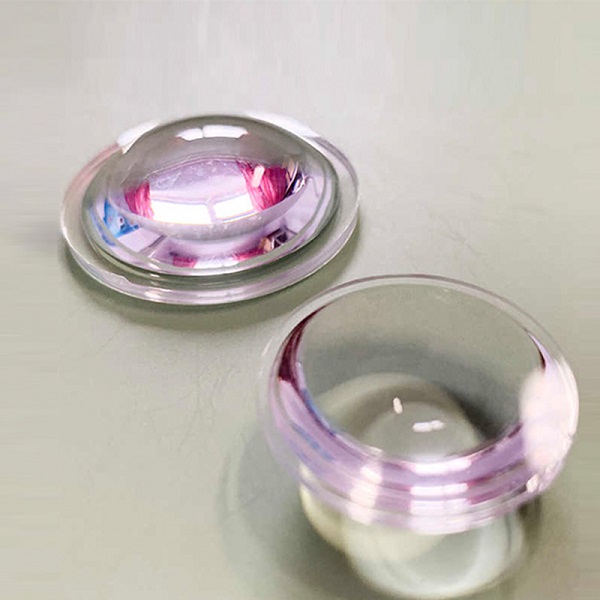
Understanding where the glass optical components market stands today—and where it’s heading—requires examining both macroeconomic drivers and application-specific demand patterns that shape supplier capabilities and constraints.
The optical glass market is experiencing unprecedented expansion across multiple dimensions. Valued at $21.2 billion in 2025, the market is projected to reach $36.1 billion by 2035, representing a compound annual growth rate of 5.5% . This growth isn’t uniform across regions or applications—it reflects fundamental shifts in how industries deploy optical technology.
Asia Pacific dominates the global landscape with a 40.10% market share, driven by concentrated manufacturing ecosystems in China, Japan, and South Korea . China alone accounts for more than 50% of global optical glass production, with specialized hubs across Jiangsu, Guangdong, Jilin, and Fujian provinces . These regional clusters offer distinct advantages: Jiangsu excels in advanced photonics and medical optics, Guangdong enables rapid prototyping and high-volume manufacturing, while Jilin—home to Changchun, historically recognized as China’s optics capital—specializes in military-grade and scientific-grade precision optics .
North America captures approximately 20% of global demand, fueled by aerospace, defense, and medical imaging applications . Europe accounts for about 15% of consumption, with Germany contributing over 35% of regional production through strong R&D infrastructure and established optical equipment manufacturers . The Middle East and Africa, while smaller at roughly 10% combined share, represent emerging markets with growing investment in scientific research and telecommunications infrastructure .
Consumer electronics remains the largest application segment, with smartphones, AR/VR headsets, and digital cameras driving consistent demand for high-performance glass optics . The integration of optical glass into wearable technology represents a significant trend—Ray-Ban Meta smart glasses experienced 40% sales growth within three months of release, while AI-powered virtual try-on tools have increased online eyewear sales by 35% .
Medical imaging represents the fastest-growing application segment, with endoscopy, optical coherence tomography, and digital pathology systems pushing resolution and miniaturization boundaries. Over 70% of modern endoscope systems now incorporate advanced optical glass components, and global healthcare infrastructure expansion continues driving adoption across diagnostic and surgical applications .
The automotive revolution has created entirely new demand categories. Each autonomous vehicle is projected to incorporate more than 15 optical sensors and cameras, significantly expanding the addressable market for precision glass components . Advanced Driver Assistance Systems (ADAS) rely on high-quality lenses as primary sensory inputs for decision-making and perception, with post-pandemic vehicle purchases accelerating adoption of these safety features .
Telecommunications and data infrastructure represent perhaps the most explosive growth area. Corning reported 51% revenue growth in its optical communications segment, reaching $1.37 billion, driven by strong demand for optical fiber materials used in AI computing applications . Global fiber deployment now exceeds 5 million kilometers annually, each kilometer requiring precision glass components for signal transmission and management .
Glass optical components derive their performance from precise chemical formulations and manufacturing processes that control refractive index, dispersion, and transmission characteristics at the molecular level. Understanding these fundamentals prevents costly specification errors.
Optical glass is categorized primarily by refractive index and Abbe number, which together determine how light bends and disperses as it passes through the component. The market encompasses several distinct families serving different applications.
Colorless optical glass dominates high-precision applications—microscopes, telescopes, and scientific instruments—where transmission efficiency and minimal distortion are paramount . BK7 borosilicate crown glass remains the industry workhorse, delivering exceptional homogeneity and low bubble content essential for precision imaging systems. For applications demanding broader spectral performance, fused silica extends transmission from ultraviolet through near-infrared while maintaining near-zero thermal expansion—critical for laser systems where dimensional stability under thermal load is non-negotiable.
Colored optical glass serves applications requiring selective light filtration, including photography, spectroscopy, and laser systems where specific wavelength absorption is required . Recent innovations include infrared-absorbing glass for defense and security systems, and color-adaptive lenses that respond to changing light conditions—Transitions Color Touch lenses have driven 20% growth in this category .
Specialty glass categories address emerging applications. Laser glass enables industrial cutting, medical procedures, and military guidance systems through precisely controlled emission and amplification properties. The development of nonlinear optical glass opens possibilities for optical computing and all-optical signal processing—technologies that will define the next generation of photonic systems.
Beyond basic glass type, several material properties directly impact component performance and must be verified during supplier evaluation.
Refractive index homogeneity determines how uniformly light travels through the material. Variations as small as 10⁻⁶ can introduce wavefront distortion in precision imaging systems. Premium glass grades offer tighter homogeneity tolerances, essential for diffraction-limited optics and high-power laser applications.
Bubble and inclusion content directly affects transmission efficiency and scatter performance. Specifications are typically expressed as bubble class according to international standards (ISO 10110), with higher-quality optics requiring class 0 or class 1 ratings.
Stress birefringence results from internal mechanical stress introduced during manufacturing. Proper annealing—a slow, controlled cooling process that removes internal stress—determines final density and refractive index consistency . The annealing rate may be as slow as 2 Kelvins per hour for fine-annealed glass, and must be consistently applied for each glass type .
Chemical durability matters for applications involving humidity exposure, cleaning cycles, or harsh environments. Suppliers serving medical and defense markets maintain documented chemical resistance data and validation protocols.
Glass optical component manufacturing involves a sequence of specialized processes, each affecting final quality and cost structure. Understanding these processes helps buyers differentiate genuine capability from marketing claims.
The journey begins with glass fabrication—mixing purified compounds, heating to produce a glass melt, and slow cooling until solidification . For high optical quality, highly purified materials are used, and thorough mixing avoids inhomogeneities. Contamination from containers must be avoided entirely.
Blank production follows, creating pieces with roughly the right dimensions and oversize of approximately 1 millimeter . For volume production, blanks may be produced through embossing or molding processes. For small volumes, cutting or trepanning from larger glass blocks using diamond saws is typical .
Generation creates the approximate surface shape, bringing the component within 0.1 millimeter of final dimensions . For spherical surfaces, cup-shaped grinding wheels with diamond grit are used. Aspheric lenses may require diamond turning or other specialized processes.
Lapping and polishing achieve final surface quality. Lapping removes surface damage from previous steps using progressively finer abrasives . Polishing—using cerium oxide powder in synthetic pads—achieves the final optical surface, often with deviations below λ/10 (approximately 63 nanometers for visible light) .
Edging processes the peripheral regions for precise mounting, ensuring proper optical axis orientation . Throughout manufacturing, optical characterization using interferometers and profilometers verifies surface quality and guides process adjustments .
Precision Glass Molding (PGM) has emerged as a transformative alternative to traditional subtractive manufacturing. In PGM, a glass blank is heated together with the mold to a temperature between transformation temperature and softening temperature, then pressed to form a lens . The glass takes on the mold shape without requiring subsequent grinding or polishing steps.
Compared to conventional methods requiring multiple grinding and polishing operations, PGM eliminates time-consuming material-removing steps . The process is particularly suitable for economical production of large quantities, with applications ranging from micro-optics to complex aspheric elements.
Rod Glass Molding (RGM), a proprietary development by some manufacturers, achieves even faster cycle times—measured in fractions of minutes—making it ideal for series production from hundreds to hundreds of thousands of units . RGM enables complex glass optics and microstructured surfaces with quality approaching that of precision molding, but at significantly lower cost per unit.
For procurement professionals, suppliers investing in PGM and RGM capabilities signal commitment to cost-effective volume production and complex geometry manufacturing. These processes enable shorter lead times and lower unit costs compared to traditional grinding and polishing, particularly for quantities exceeding 1,000 units.
Selecting glass optical component suppliers requires moving beyond glossy brochures to rigorous, multi-dimensional assessment. Technical capabilities must be verified through documentation and testing. Operational metrics provide insight into supplier reliability that price alone cannot capture.
Begin by verifying material expertise across the glass families relevant to your application—BK7 for visible imaging, fused silica for UV laser systems, colored glass for spectral filtering. Request refractive index measurements, Abbe number validation, and spectral transmittance curves for actual production batches, not just datasheet values.
For custom geometries, evaluation deepens. Aspheric lenses require deterministic polishing or precision molding capabilities distinct from spherical surfacing. Cylindrical optics demand specialized generating equipment. Diffractive optical elements push into lithographic territory. Leading suppliers maintain in-house capabilities for these advanced geometries and provide documentation of achieved tolerances.
Coating capabilities often separate capable suppliers from exceptional partners. Anti-reflective coatings, dielectric mirrors, and dichroic filters require vacuum deposition systems with thickness monitoring and adhesion validation. Request coating durability data—humidity testing per MIL-STD-810, abrasion resistance per MIL-C-48497, and spectral stability over time—before committing to production volumes .
ISO 9001 certification provides baseline confidence, but optical quality demands deeper verification. Scratch-dig specifications (typically 60-40 or better for precision optics), wavefront distortion (λ/4 or λ/10), and centration tolerances (arc-minute or arc-second) require specific measurement capabilities.
Inspect the metrology arsenal during virtual or on-site audits. Interferometers verify surface figure. Spectrophotometers confirm coating performance. Profilometers measure surface roughness. Suppliers lacking in-house interferometry cannot reliably deliver λ/4 optics regardless of claims.
For high-precision applications, request evidence of traceability to international standards. Batch-specific documentation, material origin reports, and test results provide confidence that quality systems are actually followed rather than merely certified.
Transaction data from verified suppliers reveals patterns that technical discussions miss. Several key performance indicators merit attention during vendor shortlisting :
On-time delivery rate should aim for 95% or higher. Top performers like Changchun Juncheng Optical Instrument achieve 100% on-time fulfillment, reflecting strong internal scheduling and logistics coordination .
Response time under four hours indicates active account management and ability to support urgent requirements. Quanzhou Yanshuai Automation Technology leads with sub-one-hour responses, making it suitable for time-sensitive projects or iterative design feedback loops .
Reorder rates provide perhaps the most powerful signal. Lower rates (below 15%) generally indicate higher customer satisfaction and consistent quality . Guangzhou Changhong Technology’s 29% reorder rate, by contrast, suggests potential post-sale issues despite strong initial sales.
Review scores above 4.7/5.0 signal consistent buyer trust. Changzhou Recoo Healthcare maintains a 4.9/5.0 rating with near-perfect delivery performance, ideal for mission-critical medical applications .
Online revenue exceeding established thresholds correlates with export experience, inventory depth, and after-sales infrastructure. Nantong YOJO Medical Products reports $1.6 million+ annual online revenue, demonstrating significant scale and specialization in medical optics .
Real-world data from active suppliers illustrates the variation in capabilities across the market :
Changzhou Recoo Healthcare in Jiangsu combines 17 years experience, 99.7% on-time delivery, and a 4.9/5.0 review score with $760,000+ annual revenue. Its sub-15% reorder rate suggests strong customer satisfaction, making it ideal for mission-critical applications.
Nantong YOJO Medical Products, also in Jiangsu, demonstrates significant financial scale at $1.6 million+ annual revenue with 98.9% on-time delivery. However, its 22% reorder rate indicates potential gaps in after-sales service despite large output.
L-Chaser Optics in Jilin, though newer at 4 years, employs over 90 technical staff and offers exceptional sub-two-hour response times. Its 87.5% on-time delivery suggests room for operational improvement, but responsiveness positions it well for R&D collaborations.
HONG KONG FELIX OPTICAL GLASS offers K9 crystal glass with minimum orders as low as five pieces starting at $5.11 per unit, enabling rapid prototyping without inventory risk . Custom IR-grade glass optimized for 850nm–1550nm transmission demonstrates technical depth for industrial applications.
UNIVERSE OPTICAL delivers HMC-coated lenses with bulk pricing dropping below $0.60 per lens at 600+ units and 98% on-time delivery, rewarding volume commitment .
Glass optical component pricing varies dramatically based on material, geometry, coating complexity, and volume. Understanding current benchmarks supports realistic budgeting and supplier negotiations.
For high-volume commodity optics—basic lenses, protective windows, simple prisms—pricing ranges from $0.30 to $2.00 per unit at minimum order quantities of 100–600 pieces . Jiangxi Kubi Optics offers anti-blue light glasses at $0.30–$0.63 per unit with 10–100 piece minimums, catering to trend-driven consumer brands .
Mid-range precision optics—progressive lenses, custom-coated singlets, achromatic doublets—command $0.80 to $5.00 depending on freeform complexity and coating requirements . Danyang Seesee Optical provides progressive lenses at $0.80–$5.00 per pair with freeform design and astigmatism correction.
High-precision components—laser-grade lenses, endoscopic optics, IR-transmitting elements—range from $5.00 to $70.00 or more, reflecting tighter tolerances, exotic materials, and extensive metrology. HONG KONG FELIX offers K9 crystal glass at $5.11 with five-piece minimums, enabling R&D applications without inventory risk .
MOQ flexibility often separates prototyping partners from production suppliers. HONG KONG FELIX accepts orders as low as five pieces, enabling rapid concept validation . At scale, UNIVERSE OPTICAL drops pricing below $0.60 per lens at 600+ units, rewarding volume commitment with economy-of-scale benefits .
For buyers navigating the prototype-to-production transition, identify suppliers that accommodate both phases. Managing separate vendors for development and scale introduces qualification risk and delays time-to-market.
Glass optical components involve specialized materials, and international logistics. Systematic risk mitigation protects program timelines and total cost of ownership.
Never bypass sample testing regardless of supplier reputation. Order initial batches representing your production configuration—same material, same coatings, same tolerances. Verify performance against specifications using independent measurement where feasible .
For coated optics, request environmental testing: humidity exposure, temperature cycling, abrasion resistance. Coating failures often emerge under stress that simple transmission measurements miss. Leading suppliers provide these test results as standard practice rather than exceptional accommodation.
Document acceptance criteria before ordering. Surface quality (scratch-dig), centration tolerance, clear aperture definition—ambiguity in any specification invites interpretation disputes. Use international standards (ISO 10110, MIL-PRF-13830) to establish common language with suppliers .
Avoid full prepayment regardless of supplier assurances. Milestone-based structures—30% deposit, 40% upon production completion, 30% after shipment—align incentives and preserve leverage . Platform trade assurance programs provide additional protection for transactions conducted through verified channels.
For high-value programs, consider third-party inspection before shipment. Services like SGS or Bureau Veritas can verify quality against specifications, preventing surprises at destination and providing independent documentation for quality records .
Time zone differences and language barriers create misalignment risk. Implement structured request-for-quotation templates specifying material grade, dimensional tolerances, coating requirements, and acceptance criteria. Request mechanical drawings and coating specifications before ordering .
Designate single points of contact on both sides to reduce information fragmentation. Suppliers with sub-two-hour response times typically maintain dedicated account management structures that support complex requirements effectively .
Geopolitical tensions and raw material availability affect glass optical components. The industry depends on specialized raw materials—high-purity silica sand, boron oxide, lanthanum, rare earth elements—with concentrated supply sources. High-purity silica costs have increased approximately 15% since 2022, while rare earth elements used in optical coatings have experienced price volatility up to 25% .
Dual sourcing across geographic regions provides hedge against disruption. Consider qualifying one Asian supplier for cost-competitive volume and one Western supplier for assured supply of mission-critical components. The cost premium for redundancy often justifies itself during the first supply interruption.
Regional manufacturing clusters in Jiangsu, Guangdong, and Jilin offer distinct advantages that can be leveraged strategically . Jiangsu excels in medical and precision optics with strong quality systems. Guangdong enables rapid prototyping and high-volume consumer electronics. Jilin delivers military-grade and scientific precision for demanding applications.
Forward-looking procurement requires understanding not just current capabilities but technology roadmaps that will shape the next generation of glass optical components.
As data center networks advance toward co-packaged optics (CPO), engineered low-loss glass substrates valued for high resistivity, dimensional stability, and through-glass-via interconnects are emerging as an integration platform . Glass brings high resistivity, low dielectric loss, and optical transparency—properties attractive for Ka-band devices and CPO concepts where electrical and optical paths converge within the package.
Glass’s ability to host ion-exchanged or etched waveguides that route light with low loss enables direct alignment to fibers or photonic chiplets within a package . Because the through-glass via (TGV) toolbox developed for electrical interconnect can also inform vertical optical transitions, a single glass core can support both high-speed redistribution and optical waveguides with fewer stacks and interfaces.
Industry signaling suggests glass is being positioned as a platform material for next-generation optics near switch ASICs, reinforced by supplier commentary on rising CPO readiness as AI traffic scales and electrical reach limits loom .
Glass is transitioning from a specialty material to a foundational process platform in semiconductor manufacturing . Historically used in limited, process-specific roles, it is now becoming central to both temporary and permanent functions—carrier wafers, wafer-level optics, interposers, panel substrates, and glass core substrates.
Wafer demand from 2025 to 2030 is projected to grow at 10.2% CAGR, outpacing revenue growth as bonding steps multiply and packaging transitions from 2D to 3D . This expansion is supported by broader ecosystem changes: demand for glass will nearly triple by 2030, driven by CMOS image sensors, microfluidics, power devices, memory/HBM, AR, and RF applications.
The CMOS image sensor segment is the most dynamic, accounting for two-thirds of 2025 overall glass revenue, driven by high volumes in smartphones and automotive imaging . The most aggressive segment is memory, with 33% CAGR between 2025 and 2030, with HBM as the primary application. Multiple bonded-wafer cycles, super-flat carriers, TGV interposers, and glass core substrates enhance signal integrity and warpage control.
Research initiatives continue pushing manufacturing boundaries. Laser-assisted machining combines ultra-precise diamond drilling with targeted laser heating, making glass locally ductile during machining. This hybrid approach shortens traditional multi-stage process chains into single operations while maintaining surface quality.
AI-driven process control enables real-time monitoring systems that compare physical process measurements against finite element simulations, adjusting parameters dynamically to maintain dimensional accuracy. The result is reduced material waste, fewer development iterations, and more consistent production.
For procurement professionals, suppliers investing in these advanced capabilities signal commitment to next-generation manufacturing efficiency and complex geometry production.
Request original invoices, batch numbers, and material traceability documentation. Conduct visual inspection of surface quality and edge finish. For critical applications, perform independent spectral verification or engage third-party testing laboratories . Reputable suppliers maintain complete material provenance records and share them with qualified buyers.
Optical glass grades differ in refractive index homogeneity, bubble content, and stress birefringence. Premium grades offer tighter tolerances on these parameters, essential for diffraction-limited systems and high-power laser applications. Commercial grades provide adequate performance for illumination and imaging applications where absolute wavefront accuracy isn’t critical.
Yes, suppliers with in-house vacuum coating systems can tailor anti-reflective or dielectric coatings for your specific wavelength requirements—visible (400–700nm), near-infrared (700–1550nm), or ultraviolet . Request spectral data sheets showing actual measured performance across the operational band, not just theoretical design values.
Policies vary. Established suppliers may charge for samples to cover material and labor, while emerging players may offer complimentary samples to attract partnerships . Jiangxi Kubi Optics may waive costs for clients committing to future orders over 500 units. Clarify MOQs, shipping responsibilities, and customization limits upfront.
Sample lead times range from 1–4 weeks depending on complexity. Stock items often ship in 7–14 days . Custom lenses with special coatings or freeform surfaces typically require 21–30 days. Production timelines depend on order size: small batches (100–500 units) take 2–3 weeks; larger runs may require 6–8 weeks . Always confirm timelines in calendar days and build buffer for first-article approval cycles.
Provide detailed drawings specifying diameter, thickness, radius of curvature, centration, clear aperture, coating type, and tolerances . Leading suppliers will respond with a feasibility report and prototype timeline within three business days.
Yes, most professional suppliers accommodate factory visits by appointment . This allows inspection of equipment, meeting engineers, and observing quality control procedures firsthand—critical for high-stakes procurement decisions. Suppliers like L-Chaser Optics welcome audits, signaling transparency and confidence in operations.
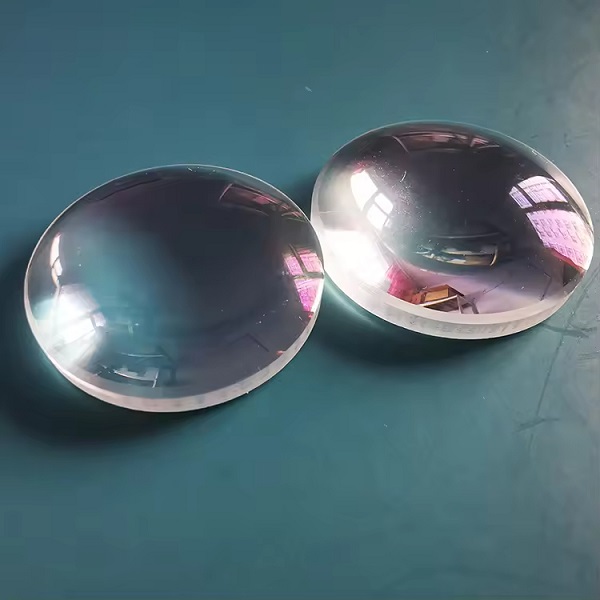
Glass optical components represent the intersection of material science, precision manufacturing, and application-specific engineering. Success in sourcing these components requires moving beyond price comparisons to deep evaluation of technical capabilities, quality systems, and operational reliability.
The market offers options across performance tiers: volume manufacturers in Guangdong delivering cost-effective standard optics, precision specialists in Jilin supporting demanding industrial and defense applications, and established leaders in Jiangsu enabling medical and scientific innovation. Each serves valid needs—the key is matching supplier strengths to your specific requirements.
By implementing structured evaluation frameworks, validating capabilities through samples and audits, and building relationships with suppliers that demonstrate both technical depth and commercial integrity, procurement organizations transform glass optical components from supply chain risk into competitive advantage.
The optical systems being designed today will define how we capture, transmit, and visualize information for years to come. From autonomous vehicles with 15+ sensors to medical endoscopes reaching deeper into the human body, from AI data centers consuming millions of kilometers of fiber to augmented reality glasses reshaping human-computer interaction—glass optical components enable it all.
The suppliers you select today will determine whether your organization leads in that future or struggles to keep pace. Choose wisely, validate thoroughly, and build partnerships that scale with your ambitions.