
Products
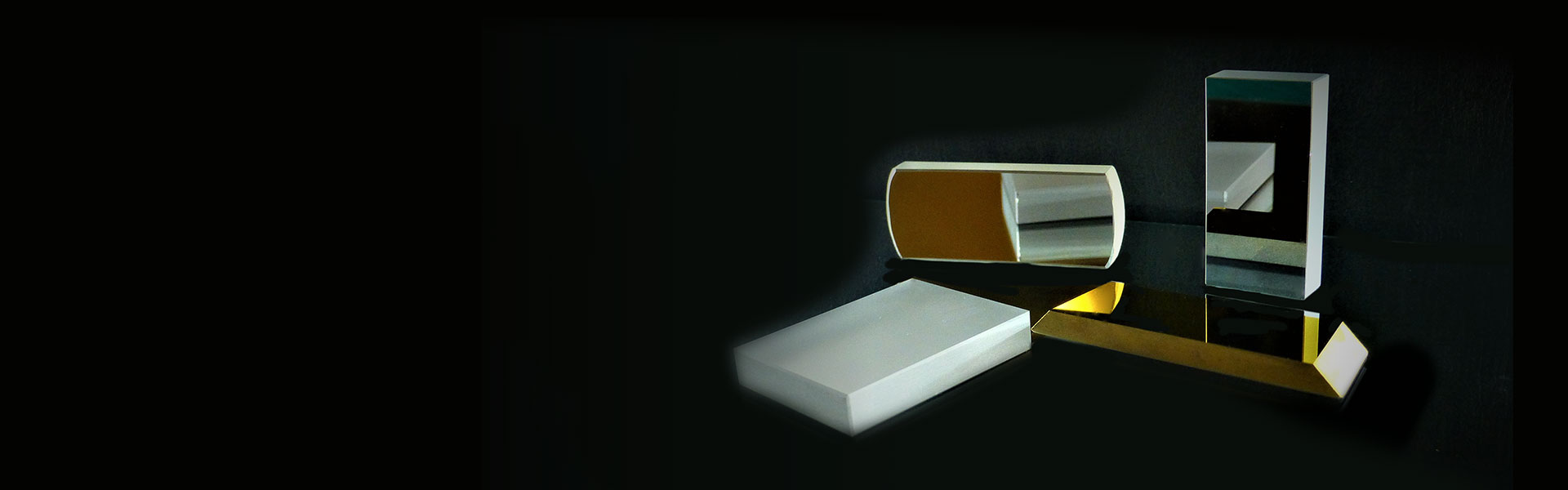
As we push towards higher-power lasers, more precise lithography, and broader spectral imaging, traditional optical glasses often hit their physical limits. When your design needs to simultaneously cover wavelengths from the ultraviolet to the infrared, when chromatic aberration becomes the bottleneck restricting imaging quality, or when the laser-induced damage threshold dictates system longevity, one material consistently emerges as the preferred solution for engineers: Calcium Fluoride (CaF₂) single crystal.
Entering 2025, with advanced semiconductor processes pushing towards 2nm and beyond, coupled with the explosion in quantum computing and infrared thermal imaging, the calcium fluoride lens has transcended its role as a mere optical component. It has become the core determinant of success or failure for entire systems. This article delves into the irreplaceable nature of calcium fluoride lenses, current technical challenges, and how to select the right product for your specific application.
Many optical professionals first encounter calcium fluoride (fluorite) through Canon’s “fluorite lenses” used for eliminating chromatic aberration in cameras. However, in industrial and research settings, its value extends far beyond this.
Unlike fused silica’s absorption limitations in the UV region or germanium’s opacity in the visible spectrum, calcium fluoride boasts an exceptionally “tolerant” spectral transmission. High-quality calcium fluoride single crystals exhibit high transmission from the Deep UV (DUV) at 180nm all the way to the Mid-Wave IR (MWIR) up to 8μm.
What does this mean in practice? Within a single optical system, using a calcium fluoride lens allows you to perform visible light alignment, UV laser processing, and infrared thermal radiation detection simultaneously, eliminating the need for frequent optical path switching or lens changes. For multi-spectral fusion imaging systems, such as those used in certain precision guidance or complex bio-imaging applications, this characteristic is exceptionally attractive.
By 2025, high-power lasers are commonplace. Traditional optical materials absorb heat from high-power lasers, causing their refractive index to change – the well-known “thermal lensing effect.” Calcium fluoride not only has a low coefficient of thermal expansion, but its refractive index change with temperature (dn/dT) is also very small. This means that in industrial environments with significant temperature fluctuations, calcium fluoride lenses maintain focal stability, ensuring long-term processing repeatability. For high-power laser cutting heads operating in the tens of kilowatts, this is a critical safeguard for maintaining beam quality.
According to recent market analysis, the global calcium fluoride optical component market is projected to reach several hundred million dollars by 2032, with a compound annual growth rate (CAGR) between 6% and 7.5%. Three core application areas are primarily driving this growth:
In the era preceding widespread EUV adoption, and within current DUV immersion lithography, calcium fluoride lenses remain crucial components in illumination systems and projection objectives. They are particularly vital for ArF (193nm) and KrF (248nm) excimer lasers. Compared to quartz, calcium fluoride offers higher laser damage thresholds and better transmission in the DUV range. As logic chips advance towards 2nm and beyond, the demand for large-aperture, high-homogeneity, low-stress birefringence calcium fluoride crystals becomes increasingly critical.
While chalcogenide glasses are more cost-effective, when handling high-power CO₂ lasers (10.6μm), calcium fluoride remains the preferred choice for focusing and collimation due to its extremely low absorption coefficient and excellent thermal stability. Furthermore, in spectroscopic applications using mid-infrared quantum cascade lasers (QCLs), calcium fluoride’s intrinsic lack of birefringence preserves the light’s polarization state – an essential factor for gas detection and trace analysis.
The space environment presents extreme temperature cycles. Calcium fluoride lenses not only withstand severe thermal shock but also exhibit radiation resistance. In multi-spectral sensors on reconnaissance and Earth observation satellites, calcium fluoride is frequently used as the primary optical window or corrector plate. This ensures that optical performance remains stable over years of service life.
Despite its excellent performance, calcium fluoride is not an easy material to work with. If you’ve sourced calcium fluoride lenses before, you’re likely familiar with its delicate nature. It has relatively low hardness and exhibits significant brittleness and anisotropy. Traditional polishing processes often leave scratches and subsurface damage on the surface.
In the past, achieving surface figure accuracy often meant sacrificing surface finish. However, this trade-off can be disastrous in high-power laser applications, as microscopic cracks become heat concentration points, ultimately causing the lens to fracture. The trend in 2025 is towards hybrid manufacturing processes.
State-of-the-art research indicates that combining “Magnetorheological Finishing (MRF) + Dynamic Acid Etching + Ion Beam Figuring” can effectively remove the subsurface damage layer left by conventional polishing. This near-damage-free processing technique can reduce the photothermal weak absorption value of calcium fluoride elements by more than an order of magnitude. This means the lens will not heat up or deform due to microscopic impurities or defects under intense laser irradiation. If your application involves high-power UV or IR lasers, verifying with your supplier that they employ such advanced polishing techniques is a critical step in the selection process.
Calcium fluoride itself has a relatively low refractive index, which provides some inherent anti-reflection properties. However, for multi-band or specific wavelength applications, coatings are non-negotiable. A persistent challenge for the industry is achieving good adhesion between the coating materials and the calcium fluoride substrate, and matching their coefficients of thermal expansion. Particularly in the 3-5μm mid-wave infrared band, the development and deposition of highly efficient anti-reflection coatings directly determine whether the lens’s actual transmission can be boosted from around 90% to over 99%. If the coating and substrate are mismatched, delamination is highly likely under thermal shock testing.
Faced with a plethora of suppliers, procurement decisions can feel overwhelming. Beyond comparing price and lead times, paying close attention to the following technical specifications is highly recommended:
For DUV lithography or high-precision interferometry, crystal orientation is critical. While the <111> orientation is common for growth and general use, in specific wavelength applications, the <100> orientation, combined with appropriate design, can help cancel out the material’s inherent birefringence effects. Always check the supplier’s stress birefringence data (typically expressed in nm/cm). Lower values guarantee more uniform imaging quality.
If your application is visible or near-infrared imaging, a surface quality of 40-20 scratch/dig is often sufficient. However, for high-power UV lasers, you may need to request stricter 20-10 standards from your supplier, or even ask for subsurface damage inspection reports. Remember, calcium fluoride is relatively soft, requiring meticulous care during cleaning. It’s advisable to request that the supplier ensures proper edge beveling before shipment to prevent chipping during installation.
Optical designs in 2025 are increasingly personalized. Standard off-the-shelf components often cannot meet specific focal length or diameter requirements. Currently, regions like Changchun and Shanghai in China are hubs for optical fabrication companies capable of providing everything from prototype design to volume production. When requesting a quote, besides providing standard parameters like radius of curvature and center thickness, it’s beneficial to specify your intended operating wavelength band. This information will directly guide the supplier in selecting the appropriate raw material grade (UV-grade vs. IR-grade) and coating solution.
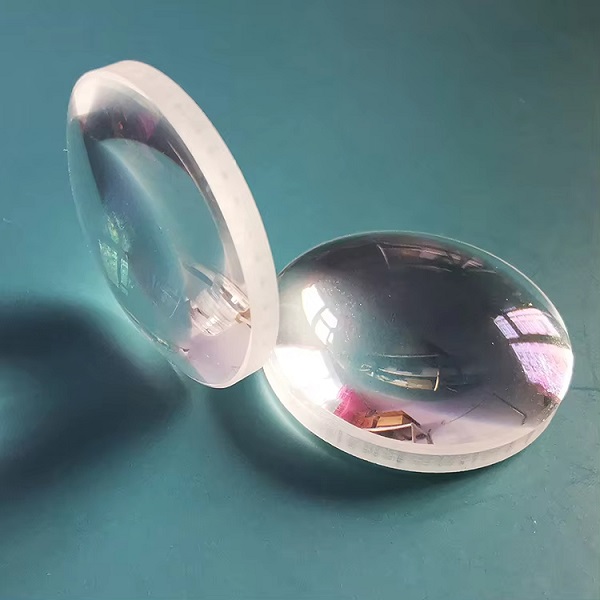
With its ultra-wide transmission range covering 180nm to 8μm, extremely low dispersion, and excellent thermal stability, the calcium fluoride lens maintains an irreplaceable role in high-end optical fields, from semiconductor manufacturing to deep space exploration. While its material cost exceeds that of ordinary glass and its processing is more challenging, the adoption of near-damage-free polishing and advanced coating technologies is continually unlocking its potential.
If your project involves withstanding extreme laser energy or achieving perfect imaging across a wide spectral range, a calcium fluoride lens might be the key to breaking through your current design limitations.
Looking for the optimal calcium fluoride lens solution for your laser system or imaging equipment?
We offer a comprehensive range of calcium fluoride (CaF₂) lenses, from UV-grade to IR-grade, available as standard stock items and custom fabrication services. Our engineering team specializes in complex surface geometries and high-damage-threshold coating technologies. We can provide optical design advice tailored to your specific wavelength and power requirements. Contact our technical sales team today to request sample testing or a customized solution quote.